
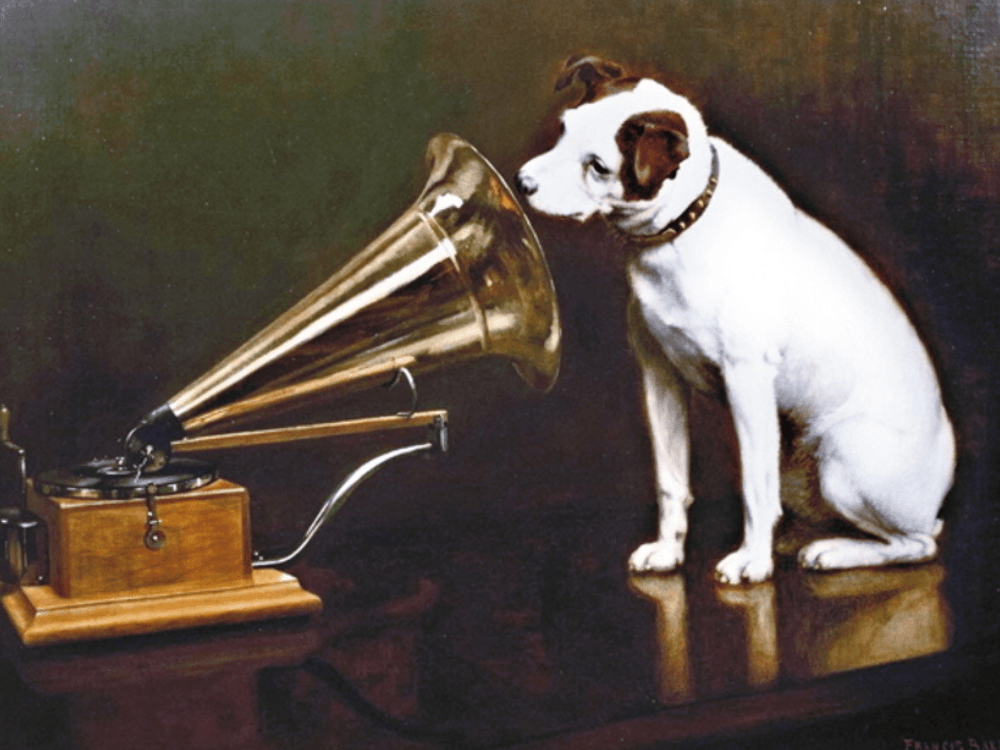
Whether you credit Edison or Emile Berliner with audio playback technology (that is, the phonograph or the gramophone), recorded talking stories have been around for almost 150 years — and today’s version (audiobooks) have ca-chinged to the tune of $2 billion in sales revenue in 2023, according to the Audio Publishers Association.
To revel in the words of a good author is like taking in the aroma of fresh coffee. Instantly, the timbre and flow wed you to the narrative, your mind’s appetite whetted, and even before the book’s end leave you craving more. You make a mental note of the author. You’re on the lookout. You’re eager to see and absorb more.
Blindness predictably changes this formula. After years of coveting and then alighting upon words on a page, you have no choice but to pursue the alternative — an entirely separate genus known as books read aloud. And the shift is jarring to the core. At least for me, for decades a lover of hardback books I could make mine and mine alone through copious underlining. They exuded certainty. You gave the story before you a quietly comforting inner voice, the music of this voice all your own.
Having a book read to you plops you into another world, one riddled with encumbrance. You must agree to relinquish the task of licking clean a page with your eyes. An interloper appears, a reader who installs himself as the interpreter of words that once belonged wholly to you. He is the person whose voice you must embrace wholeheartedly, if you are to still appreciate that author you once loved as a seeing reader.
An interloper appears, a reader who installs himself as the interpreter of words that once belonged wholly to you.
It’s a fiercely difficult job, that of the interloper, akin in many respects to the dubber of a film from one language to another. How would Woody Allen maintain his humor in Italian? It’s a profession I once mocked and dreaded being subjected to, preferring (in the pre-Internet age) to wait and see clusters of movies during my annual American pilgrimages from Rome. I loathed dubbing just as I initially loathed books read aloud. Both were a warping process because, again, I disdained the intruder.
But now, more than a year into my semi-blindness, my “vision” of the role of the interloper has changed dramatically. I now “read” books by the dozens, hearing overriding vision as if returned to a long-ago age with its oral tradition.
But the tastes and aromas of reading have been adjusted in the most basic of ways. Books are the sum of their sound, that sound a voice, soothing or irritating. To wit, when I discovered that Norwegian writer Jon Fosse had been awarded the 2023 Nobel Prize for literature, I became curious. I knew little about his books and, unlike a decade ago, I could not saunter to a bookstore in search of his work. I was instead compelled to ask my Internet assistant to find Audible titles of his works. I was immediately told of many but, alas, found the various readers of his works, some American, others British, to be unlistenable. Rather than giving me the book, they gave me themselves, choppy or awkward in their reading, not credibly Norwegian in spirit, soiling the Jon Fosse of my imagination. They acted as barriers, not conveyers, of the narrative. I noticed the same among earnest authors who read their own works, skewering their own fair prose with shrill or leaden voices (try listening to American humorist David Sedaris or sportswriter David Maraniss, both gifted writers but awful raconteurs).

One voice actor, Henry Strozier, has voiced many literary characters or narrators (as with Cruz Smith’s works), plus a good number on stage and screen.
For my part I came to settle on an entirely new formula, a not-ironic brave new world. I came, or have come, to seek not authors whose works I liked but the voices of readers whose tones engaged me, and this has transformed the nature of my reading appetite. I discarded some of the audibly wrecked works of Richard Ford and Cormac McCarthy, two novelists I admired, instead listening to works by the likes of onetime columnist Pete Hamill, Swedish writer Henning Mankell, Norwegian crime-fiction novelist Karin Fossum, and many books by Martin Cruz Smith, who first came to attention decades ago when he published “Gorky Park,” a thriller set in Soviet Russia and driven by a detective named Arkady Renko, none of these selections much in line with my pre-glaucoma preferences. Credit neither Hamill nor Mankell for these selections, but the voices of American actor and narrator Henry Strozier, his firm voice a gravelly rumble, and Scottish voice actor David Rintoul, he of suave diction and imagined David Niven sensibility and manners. Strozier’s Renko and Rintoul’s enticing penetration of Fossum’s characters are, in effect, my new sweets and coveted odors.
I seek out their names. I will on many occasions listen to whatever it is they read. They put my mind’s eye to work, replacing my dead vision, and they do so in ways riveting enough to allow me to forget, or at set aside, my optical hindrance.
There are of course many fine readers in addition to my two newly beloved favorites. Among them Simon Vance, who brings flair to the works of self-published British author Mark Dawson, and Tom Parker, who gave voice and life to Ross Macdonald’s Lew Archer. It is a long and pleasant list. These are the people who have saved my reading life from extinction.
Voice matters.
To read is to possess and inhabit, as if to become the crab beneath the shell.
Writing is as much a musical endeavor as it is an emissary of the written word.
If tone, cadence, and diction fail, writing turns annoying, the spoken word with it. This is as true in dedicated conversation as it is in reading aloud.
The slurred and jargon-laden speech that animates portions of the Internet, including podcasts, can affront the aesthetic sensibility for no other reason than distraction, since noun-become-verb recitations do just that. Too much “prioritize,” now commonplace, can antiquate the more agreeable “I should make [that] a priority,” to my mind a pity (as is calling a meal introduced by tasty appetizers “awesomely appetized”). The same holds (and I have written of this before) with the acned “multiple” replacing the simple “many.” “I have dreamed of you on multiple occasions,” which transforms potential romance into something fallen, with“so many” sadly ignored. The assassination of “celebrated” (as in “celebrated figure”) to make room for all-purpose but tinny “iconic” also grates on old-school ears.
So it is that I err on the side of readers who come from the school of many, not multiple. And, as mentioned, there are only a few such figures, with the best male readers stronger than most of their female counterparts — though Juliet Stevenson’s rendering of Virginia Woolf’s “To the Lighthouse” is superbly good and far better than that of the celebrity reader of the same book, Nicole Kidman. Stevenson endows Woolf’s character with spirit and space, whereas Kidman, though earnest, makes them an adjunct of her film-role voice.
The deity of spoken narrative is diction, which contains not a single casual bone. To read is to possess and inhabit, as if to become the crab beneath the shell.
When Strozier reads, he at times pauses for breath, as if inhaling the fragrance of the words before him. It is this, a private pause of sorts, that I love because it suggests the reader is not merely reciting but acting, bringing my darkened screen to life.
 christopherwinner.com